Buying your first home in London is one of the most exciting — and terrifying — things you'll ever do. There's so much to think about: mortgages, solicitors, chains, surveys, searches, insurance. Somewhere in that list, between the mortgage offer and the exchange of contracts, sits the property survey. And it's the one step that first-time buyers most often either skip or don't fully understand. At Hammersmith Surveyors, we talk to first-time buyers every day, and this guide answers every question we hear.
Why Do You Need a Survey at All?
Let me be direct: you are not legally required to get a survey. But not getting one is a significant financial risk.
Think about what a property actually is. It's a complex, aging structure — with a roof, walls, foundations, drainage, heating, electrics and plumbing — that has been lived in, modified, maintained (or neglected) by unknown previous owners over decades or even a century or more. You can't tell from viewing a beautifully decorated property whether the walls behind the wallpaper are damp, whether the loft insulation is absent, whether the drainage is failing, or whether those hairline cracks in the rear extension are new movement or old.
A property survey is a professional, independent assessment of the property's condition. It tells you what you're actually buying, not just what it looks like.
The Three RICS Survey Levels Explained Simply
RICS (the Royal Institution of Chartered Surveyors) sets the standards for residential property surveys in the UK. Since 2021, surveys are categorised into three levels.
Level 1: Condition Report
The most basic survey. It gives a snapshot of the property's condition using a simple traffic-light system (Condition 1, 2, 3). No advice on repairs, no cost estimates. Suitable only for new-build or very modern properties in excellent condition. Most first-time buyers in London, buying anything more than a few years old, should not use a Level 1 survey.
Level 2: HomeBuyer Report
The most popular survey for first-time buyers. The surveyor visits the property, inspects all accessible areas, and produces a detailed report covering the condition of each element of the property. Issues are rated Condition 1 (no action), Condition 2 (monitor/repair), or Condition 3 (urgent attention). The report includes a market valuation and insurance reinstatement value. Most Level 2 surveys cost £450–£700 in London.
Level 3: Building Survey (formerly the Full Structural Survey)
The most comprehensive survey available. The surveyor inspects every accessible part of the property in greater detail and provides a thorough narrative report with more detailed investigation of defects, probable causes, and repair options. It includes a more detailed examination of structural issues and typically includes greater detail on the loft space, roof structure, and hidden areas. Most Level 3 surveys cost £700–£1,200+ in London depending on property size.

Which Survey Should You Get?
This is the question I'm asked most often. Here's a simple decision guide:
Get a Level 2 HomeBuyer Report if:
- You're buying a conventional property in reasonable condition
- The property was built after 1900 and is a standard construction
- There are no obvious major defects visible during your viewings
- The property has been regularly maintained
Get a Level 3 Building Survey if:
- You're buying an older property (pre-1900 Victorian or Edwardian)
- The property is in poor condition or has obviously been neglected
- You noticed concerning features during your viewings (cracks, staining, damp smell)
- The property has had significant extensions, alterations or conversions
- It's an unusual or non-standard construction (listed building, timber-framed, concrete construction)
- You're buying a property at the upper end of what you can afford and want maximum protection
When in the Buying Process to Book
The right time to book your survey is after your offer has been accepted, but well before exchange of contracts.
Here's why timing matters. Exchange of contracts is the legally binding moment in a property purchase — once you've exchanged, you're obligated to complete the purchase. If a survey finds serious problems after exchange, you've already committed. The survey must happen before exchange so you can:
- Review the findings carefully
- Get specialist reports on anything concerning (e.g., a structural engineer's opinion on cracks)
- Negotiate the price down if significant repair costs are identified
- Walk away if the problems are too serious — and before you've lost the money
In London's competitive market, some buyers feel pressure to skip the survey or rush through it to avoid losing a property to another buyer. My strong advice: don't. A survey takes 2–3 weeks from booking to receiving the report. Build this into your timeline.
How to Read Your Survey Report
Your survey report will arrive as a PDF, typically 40–100 pages long. It can feel overwhelming at first. Here's how to navigate it:
Start with the executive summary: Most RICS surveys begin with a summary section that highlights the most important findings. Read this first to understand the big picture.
Focus on Condition 3 (red) items: These are urgent issues requiring immediate attention. Understand what each one is, what caused it, and roughly what it will cost to fix. Your surveyor should have included repair notes.
Review Condition 2 (amber) items: These need attention in the short to medium term. They're not emergencies, but they need to go on your to-do list and budget.
Read the commentary, not just the ratings: The narrative sections of the report often contain the most useful information. A surveyor might rate something Condition 2 but note in the text that it's "approaching the point where urgent action will be required" — that's important context.
Call your surveyor: Every Hammersmith Surveyors client gets a follow-up call to go through the report. Use it. Ask every question you have. There are no stupid questions — this is your biggest financial decision.
Using Your Survey to Negotiate
This is where the survey pays for itself — sometimes many times over.
If your survey identifies significant repair work, you have solid grounds to request a price reduction equivalent to the estimated repair costs. The approach that works best:
- Get contractor quotes for the major items (or ask your surveyor for indicative costs)
- Compile a clear, evidence-based request for a price reduction
- Present it to the seller through your estate agent professionally, not aggressively
- Be prepared for some negotiation — the seller may come back with a partial reduction or an offer to carry out some repairs before completion
A well-evidenced price reduction request is rarely refused entirely. Even a partial reduction can pay for the cost of the survey many times over. We've seen clients save between £5,000 and £35,000 by using their survey findings to renegotiate.
Common Red Flags in London Properties
Based on hundreds of surveys across Hammersmith, Fulham, Chiswick, Kensington and surrounding areas, here are the red flags we encounter most often in West London properties:
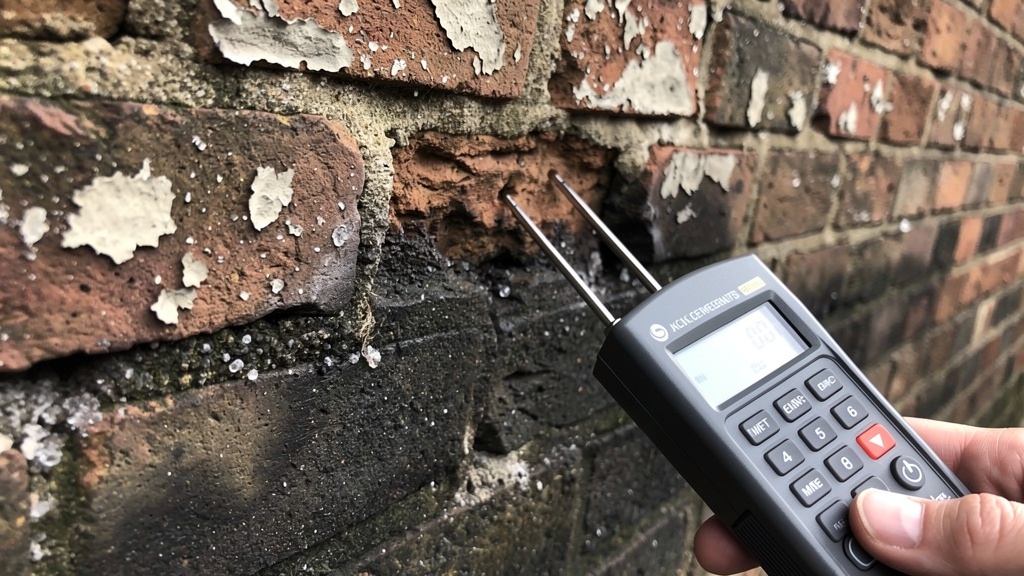
- Damp: Very common in Victorian properties. Look for staining at the base of walls, musty smells, discolouration on walls or ceilings. Read our detailed guide: Damp in Victorian Homes.
- Roof condition: Slipped slates, failed chimney pointing, blocked gutters — all very common. See our Roof Survey Guide.
- Structural cracks: Not always serious, but always need investigation. See our Structural Cracks Guide.
- Short leases (in flats): Check lease length before viewing, not just before exchange. See our Leasehold vs Freehold Guide.
- Extension quality: Many London Victorian terraces have rear extensions added without proper building regulations or planning consent. These can present significant structural and legal issues.
- Electrical wiring: Properties with original or significantly aged wiring (rubber-insulated cables, cloth-covered wiring) need full rewiring — typically £6,000–£12,000 for a terraced house.
Key Takeaways
- Always get an independent survey — never rely on the mortgage valuation alone.
- For Victorian and Edwardian London properties, a Level 3 Building Survey gives the most thorough protection.
- Book your survey after offer accepted but well before exchange of contracts.
- Survey findings give you legitimate grounds to negotiate the purchase price.
- Call your surveyor after receiving the report — understanding it is just as important as receiving it.
- Common red flags in West London: damp, roof condition, short leases, extension quality, ageing electrics.
Frequently Asked Questions
You are not legally required to get a survey. However, not getting one is a significant financial risk. A property is almost certainly the most expensive thing you'll ever buy — a survey costs a few hundred pounds and could save you tens of thousands, or help you walk away from a property with serious hidden problems.
No — this is one of the most common misconceptions first-time buyers have. A mortgage valuation is carried out for your lender's benefit, not yours. It confirms the property is worth the loan amount — it is not a structural assessment and will not tell you whether the roof needs replacing or whether there is damp. Always commission your own independent survey.
Survey costs in London vary by property size, type and survey level. As a guide: Level 2 HomeBuyer Report on a 2-bed flat: £450–£600. Level 2 on a 3-bed terrace: £500–£700. Level 3 Building Survey on a 3-bed terrace: £700–£950. Level 3 on a 5-bed house: £1,000–£1,400. Get quotes from RICS registered surveyors and be wary of very low quotes that may indicate a cursory inspection.
Don't panic — most surveys find some issues. Read the report carefully and focus on Condition 3 (urgent) and Condition 2 (attention needed) items. Ask your surveyor to explain the findings in plain language. Then decide: can you live with the issues? Do they affect the price? Should you request repairs? Should you walk away? Your surveyor can help you think through these options.
Yes — and this is one of the most valuable things a survey does. If your Level 3 survey identifies £15,000 of urgent repairs, you have a strong evidential basis to request a price reduction. Get contractor quotes or use the surveyor's repair estimates to make a clear, professional request through your estate agent. Most sellers would rather reduce the price slightly than lose the sale.
After your offer has been accepted and you have instructed a solicitor, but before you exchange contracts. Exchange is the legally binding moment — once you've exchanged, you're committed. The survey should be done well before exchange so you have time to review findings, get specialist advice if needed, negotiate the price, and make an informed decision.
You Deserve to Know What You're Buying
Buying your first home should be exciting. Getting a proper survey is how you make sure it stays that way. At Hammersmith Surveyors, we love working with first-time buyers — we take the time to explain everything clearly, answer your questions, and make sure you walk into your new home with confidence, not anxiety.
We carry out Level 2 HomeBuyer Reports and Level 3 Building Surveys across all West London postcodes. Our reports are clear, honest, and written in plain English. We'll call you after your report to walk through the findings. Get a free quote today — and let's make sure your first home is everything you hope it will be.