The roof is, quite literally, the most important part of your home. It keeps everything else dry and protected. Yet it's the part of a property that buyers pay least attention to — often because they can't easily see it, and because the mortgage valuer's drive-by report says nothing is obviously wrong. A Hammersmith Surveyors roof survey goes far deeper than that, and the findings regularly save buyers thousands of pounds.
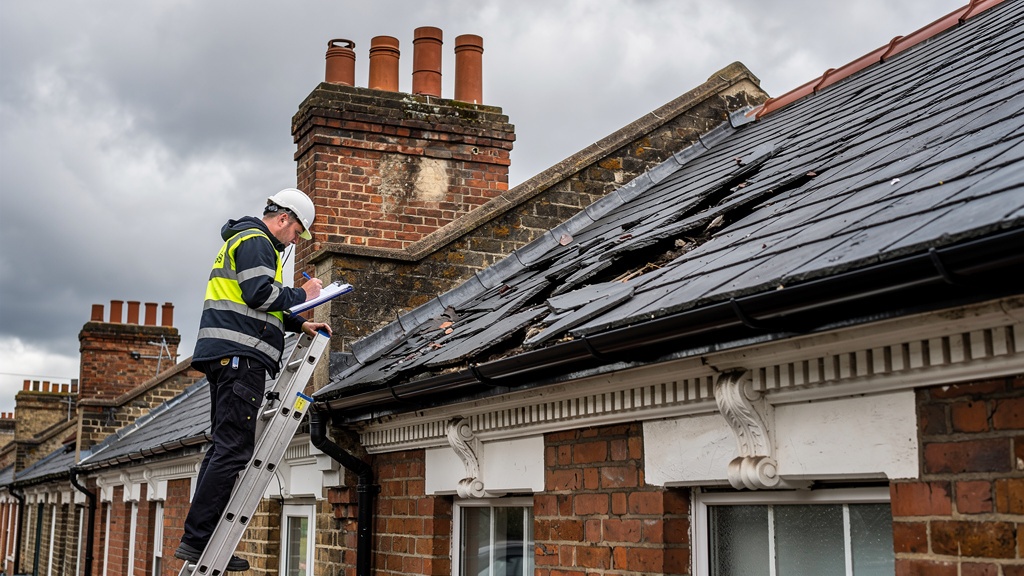
Last year, I carried out a Level 3 Building Survey on a beautiful Victorian end-of-terrace in Brackenbury Village. From the street, the slate roof looked reasonable — some missing slates visible at the rear, but nothing alarming. When I got my binoculars out and inspected properly, I found that approximately 40% of the original Welsh slate had been replaced with mismatched concrete plain tiles of different thicknesses. The mortar on both chimney stacks was crumbling. The lead flashing at the rear dormer had lifted completely. The gutters were blocked with moss. Total repair estimate: £18,000–£24,000. The buyer renegotiated £15,000 off the purchase price.
That's what a proper roof survey does. Let me explain exactly what's involved.
Why Roof Surveys Matter More Than You Think
On a typical Victorian terraced house in West London, a full roof replacement costs between £8,000 and £20,000. On a larger detached house, it can be £30,000–£50,000. A chimney rebuild costs £2,000–£6,000. Lead flashing replacement typically runs £800–£2,500 per chimney or parapet.
These are not small numbers. Yet buyers routinely exchange contracts on properties without anyone having properly checked the roof condition. It's one of the most consistent gaps I see in how people approach property purchases in London.
What Your Mortgage Valuation Misses
Your lender's mortgage valuation is not a survey. It is a valuation — a brief assessment conducted to confirm the property is worth the amount you're borrowing. It is typically completed in 20–30 minutes, often from the pavement outside.
The RICS guidance for mortgage valuations explicitly states that they are not full structural surveys and should not be relied upon for condition. The surveyor conducting a valuation will note only obvious defects visible from ground level — a catastrophically damaged chimney might get a mention; a subtly failing lead flashing almost certainly won't.
What a Roof Survey Covers
A dedicated roof survey — or the roof inspection element of a full Level 3 Building Survey — covers the following elements:
Roof Covering
The tiles or slates that form the waterproof outer skin. Surveyors assess the type of covering (original slate, plain tile, interlocking tile), its condition, signs of slippage or breakage, evidence of patching with incompatible materials, and the overall remaining life expectancy.
Roof Structure
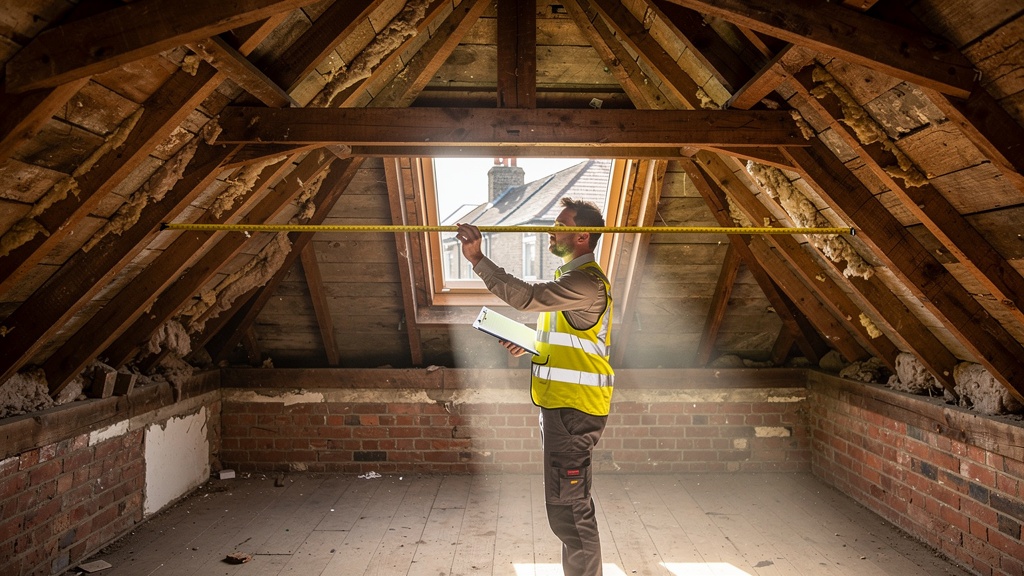
From inside the loft space, the surveyor checks the timber roof structure — rafters, purlins, ridge board, binders and ceiling joists. Signs of deflection, past or active woodworm, rot, and inadequate structural connections are all noted.
Chimney Stacks
Chimneys are often the weakest point of a Victorian roof. We check the condition of the brickwork, pointing, chimney pots and haunching (the mortar "cap" around the base of the pots). Failed chimney pointing is one of the most common causes of water ingress into roof spaces and chimney breast walls.
Flashings and Lead Work
Lead flashings seal the vulnerable joints where the roof meets walls, chimneys, dormers and other projections. Failed flashings are a very common cause of water ingress. Surveyors check for lifting, cracking, inadequate laps, and signs of patch repairs that indicate ongoing problems.
Gutters and Rainwater Goods
Blocked or overflowing gutters are a leading cause of penetrating damp in external walls. We check gutter condition, falls (the angle to drain water), downpipe condition and discharge points. Cast iron gutters on Victorian properties look lovely but are expensive to replace — around £80–£150 per metre.
Flat Roof Areas
Many Victorian terraces have rear flat roof additions (Victorian extensions, bay roof sections). Felt flat roofs typically last 10–20 years; EPDM rubber roofing lasts 25–50 years. We assess the covering type, condition, falls and any signs of ponding or failure.
Common Roof Defects in Victorian London Homes
Based on hundreds of roof inspections across Hammersmith, Fulham, Chiswick and Kensington, here are the defects we find most often:
- Slipped or missing slates (60% of properties): Caused by failing nibs (the small clips holding slates in place) or corroded nails. Individual slates are cheap to replace; widespread failure means a full re-roof.
- Failed chimney pointing (55%): Mortar between chimney bricks weathers and erodes over time. Almost always fixable — but if left, water penetration into the chimney breast can cause significant internal damage.
- Mixed tile types (40%): A patchwork of original Welsh slate, concrete tiles and modern slates usually indicates the roof has had multiple patch repairs over decades. This is not necessarily a problem in itself, but it warrants closer investigation of the underlying structure.
- Blocked gutters (50%): Simple to clear and maintain, but the damage they cause if ignored (penetrating damp in external walls) can be expensive.
- Flat roof failures (35% of properties with flat roofs): The junction between pitched and flat sections is particularly vulnerable. Felt coverings over 15 years old almost always show signs of failure.
Drone Roof Surveys: The New Technology
For properties where safe ground-level or ladder inspection is difficult — steeply pitched roofs, multi-storey properties, complex roof geometry — drone surveys provide an excellent alternative. A qualified drone operator flies close to the roof surface, capturing high-resolution imagery that can be reviewed in detail.
At Hammersmith Surveyors, we use drone surveys for particularly complex properties and as a supplementary tool when ground-level inspection leaves questions unanswered. Drone survey add-ons typically cost £150–£300 on top of a standard survey fee.
Roof Repair Costs: What to Budget
When we flag roof defects in our surveys, clients naturally want to know: how much is this going to cost? Here's a realistic guide to common roof repair costs in West London (2026 prices):
- Replacing individual slates/tiles: £15–£40 per slate/tile including labour
- Re-pointing chimney stack: £600–£1,800 depending on stack size and access
- Chimney pot replacement: £300–£800 per pot including scaffold
- Lead flashing replacement (per chimney): £800–£1,800
- Full re-roof (Victorian terrace): £8,000–£15,000 for slate; £6,000–£10,000 for plain tile
- Flat roof replacement (EPDM): £900–£1,800 for a typical 4m × 3m section
- Gutter replacement (uPVC): £600–£1,500 for a typical terrace
- Cast iron gutter restoration: £80–£150 per metre
Key Takeaways
- Your mortgage valuation is not a roof survey — never rely on it alone.
- A proper roof survey covers covering, structure, chimneys, flashings, gutters and flat roof areas.
- The most common issues in West London Victorian homes: slipped slates, failed chimney pointing, and blocked gutters.
- Roof repairs on a typical Victorian terrace range from a few hundred pounds (simple patch repairs) to £20,000+ (full re-roof with scaffolding).
- Drone surveys are available for complex or hard-to-access roofs.
- A Level 3 Building Survey includes a full roof inspection as standard — the most cost-effective way to get complete coverage.
Frequently Asked Questions
A dedicated roof survey in London typically costs £300–£500 for a standard terraced or semi-detached house. If a roof survey is included as part of a full Level 3 Building Survey, there is usually no additional charge — the roof is inspected as part of the comprehensive assessment. Specialist services like drone surveys or thermal imaging typically cost £400–£800.
A roof survey focuses specifically on the condition of the roof covering, structure, chimneys, flashings, gutters and rainwater goods. A Level 3 Building Survey covers the entire property including a detailed roof inspection. If you are buying a property and want the most thorough assessment, a Level 3 is the better choice — it includes a full roof inspection plus everything else.
Original Welsh slate on a Victorian property can last 100+ years if maintained properly. More commonly, Victorian slate roofs have been replaced with concrete plain tiles (lifespan 50–60 years) or interlocking tiles (30–50 years). Lead flashings last 50–100+ years. Mortar pointing on chimneys typically needs attention every 20–30 years.
Yes. Most roof surveys are conducted from ground level using binoculars or from a ladder at the eaves. Drone surveys offer detailed imagery of the entire roof without anyone physically accessing it — particularly useful for steeply pitched or multi-storey properties. A surveyor physically walking on a roof is rare and usually only done for specific investigations.
The most common issues include: slipped or missing slates/tiles; failed mortar pointing on chimney stacks; cracked or lifted lead flashings; blocked or overflowing gutters causing wall dampness; and defective ventilation causing roof void condensation. Most are fixable for relatively modest cost if caught early.
The Bottom Line on Roof Surveys
The roof is the one part of a property that will cause the most disruption and cost the most money to repair if seriously neglected. A proper roof survey — whether as a standalone assessment or as part of a comprehensive Level 3 Building Survey from Hammersmith Surveyors — gives you the full picture before you commit to a purchase or go ahead with renovations.
Don't let a beautiful Victorian facade fool you into thinking the roof is fine. Get it properly checked. Contact our team to discuss what roof inspection option is right for your property.