I get this question almost every day. A buyer calls us, excited about the flat or house they've found, and asks: "Which survey do I actually need?" It's one of the most important decisions you'll make during the buying process — and yet most people have no idea how the options differ until they're asked to choose.
Let me cut through the confusion. I'm James Hartley, lead surveyor at Hammersmith Surveyors. Over nearly two decades of surveying properties across West London, I've carried out hundreds of both types. Here's exactly how they differ — and how to choose the right one for your property.
The Two Main Residential Survey Types
Under the RICS Home Survey Standard, residential surveys fall into three levels. Level 1 (the basic condition report) is rarely used in practice — it's designed for new or very recently built conventional properties and is largely superseded by the more useful Level 2 and Level 3 options.
What Is a Level 2 Homebuyer Report?
The Level 2 Homebuyer Report is the most popular choice for UK property buyers. It provides a structured assessment of a property's condition using a traffic-light system:
- Condition 1 (green): No repair is currently needed.
- Condition 2 (amber): Defects that need repairing or replacing but are not considered urgent or serious.
- Condition 3 (red): Defects that are serious or need to be investigated urgently by a specialist.
The report covers all main elements of the property — roof, walls, floors, windows, services — and provides a brief commentary on each. It's readable, well-structured, and usually easier to digest than a Level 3 report.
Best suited to: Properties built after approximately 1900, in reasonable condition, of conventional construction (brick walls, tiled roof, standard foundations), and without significant alterations or extensions.
What Is a Level 3 Building Survey?
The Level 3 Building Survey — sometimes still called a Full Structural Survey — is the most comprehensive residential survey available. It goes far beyond condition ratings to provide:
- A detailed analysis of all defects found, including their cause and likely progression
- Specific recommendations for repair or further investigation
- Approximate cost ranges for remedial works
- Advice on maintenance and how to prevent future problems
- An assessment of hidden areas including roof spaces, subfloor voids, and cellars
It typically takes longer to carry out (4–6 hours on site for a large Victorian house) and produces a more substantial report — often 40–80 pages for a complex property.
"In my experience, clients who pay for a Level 3 survey on an older property almost always feel it was worth every penny — either because it uncovered problems they could use to negotiate, or because it gave them genuine confidence to proceed."
Which Survey Type Is Right for Your Property?
Here's the honest answer: if you're buying a Victorian or Edwardian property in Hammersmith, Fulham, Chiswick, or anywhere across West London, I'd almost always recommend a Level 3 Building Survey. Here's why.
Victorian and Edwardian properties need a Level 3
Properties built before 1920 — and most of those built between 1920 and 1960 — often have issues that a Level 2 survey simply won't identify adequately. These include:
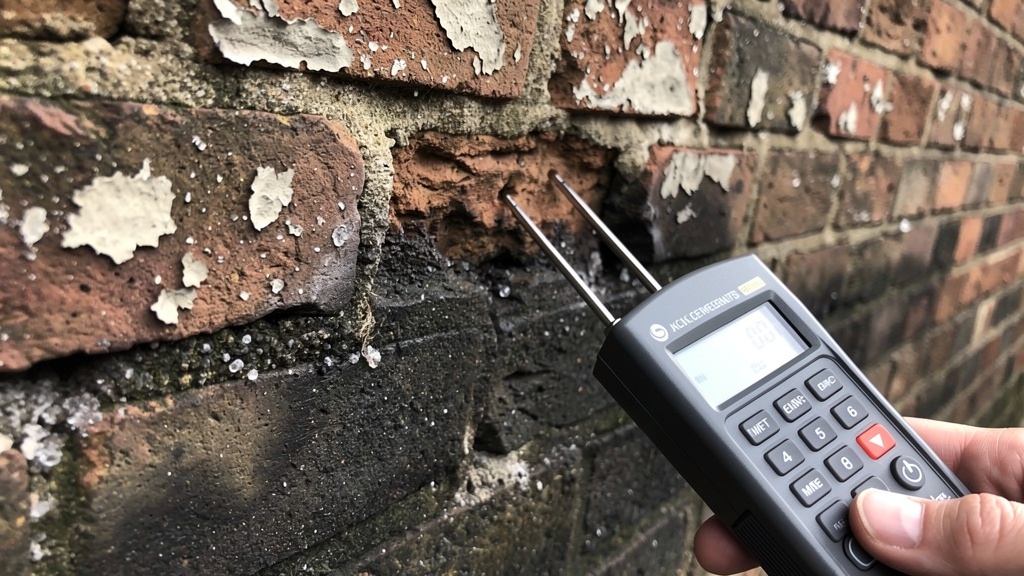
- Original timber floors with woodworm or rot hidden beneath carpets
- Single-skin brick rear returns that are cold, prone to damp, and structurally vulnerable
- Chimney stacks with failed pointing, flashings, or internal flue damage
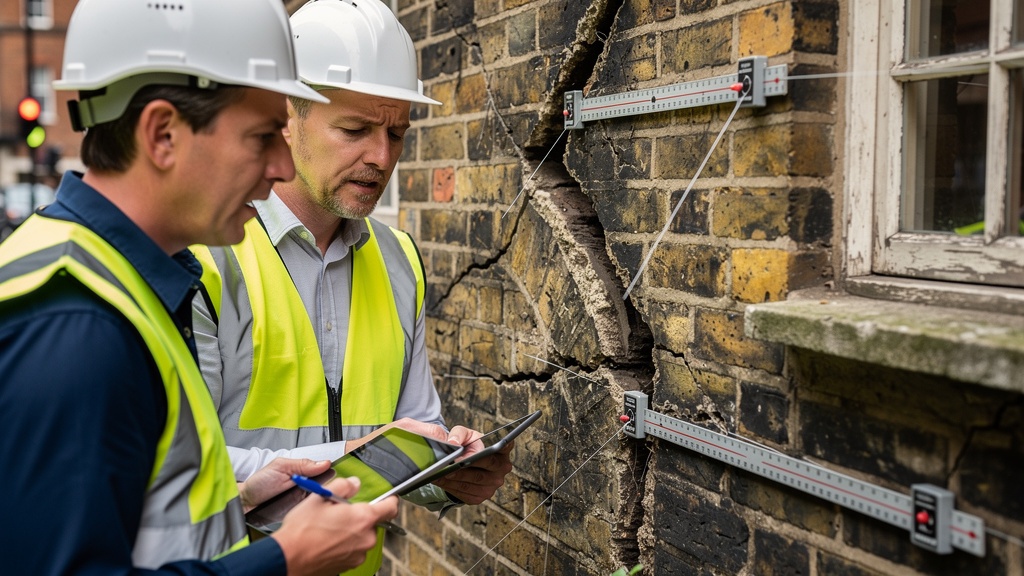
- Subsidence or movement in bay windows
- Failed lead flat roof sections over extensions
- Aged or unsafe wiring and heating systems
In my experience across Hammersmith, the typical 1900–1910 terrace I survey has at least four or five issues that fall into the Category 3 (urgent) bracket. A Level 2 report flags these — but it's the Level 3 that tells you why they've happened, what to do about them, and roughly what it'll cost.
When a Level 2 is genuinely sufficient
A Level 2 Homebuyer Report is a perfectly sensible choice if you're buying:
- A modern flat or house built after 1990 in apparently good condition
- A purpose-built apartment in a well-maintained block
- A property that's been recently renovated to a high standard
- A property where you're an experienced buyer and are comfortable managing some uncertainty
Real-World Examples from Our Hammersmith Practice
Case Study 1: The Brackenbury Village Terrace
A client instructed a Level 2 report on a 1902 terrace they were buying in Brackenbury Village. We persuaded them to upgrade to a Level 3. Good thing too — the survey identified severe lateral movement in the rear wing, caused by ground movement beneath the Victorian brick footings. The vendor had disguised it with fresh plaster. The client renegotiated a £25,000 reduction.
Case Study 2: The Fulham New-Build Flat
A couple buying a 2019-built apartment in Fulham asked for our recommendation. Given the property's age and conventional construction, we recommended a Level 2 Homebuyer Report — supplemented by our snagging inspection service. The survey came back largely clean, with only minor Condition 2 items. The couple completed confidently within three weeks.
FAQ: Choosing Your Survey Type
Does a Level 3 survey include a valuation?
No. Both the Level 2 and Level 3 surveys can optionally include a market valuation if requested in advance, but this is separate to the survey itself. Our standalone valuation service provides a RICS Red Book valuation for any purpose.
Can I upgrade from a Level 2 to a Level 3 after booking?
Yes, usually — as long as the inspection hasn't yet taken place. Just let us know and we'll adjust the scope and fee accordingly.
Will the report help me negotiate the price?
Often, yes. A Level 3 report in particular gives you specific, costed evidence of defects — which forms the basis of a price renegotiation. We're always happy to talk you through how to use our findings in negotiation.
What happens if the survey reveals a serious problem?
We call you. Before you even receive the written report, your surveyor will talk through any significant findings personally. We never leave clients to decipher bad news alone.
The Bottom Line
If you're buying a standard modern property and know what you're taking on, a Level 2 Homebuyer Report will serve you well. But if there's any doubt — if the property is old, unusual, has been extended, or you're simply not sure — invest in a Level 3 Building Survey. The extra cost (typically a few hundred pounds more) is almost always worth it.
Not sure which is right for your specific property? Contact us with the property address and age and we'll give you our honest recommendation — no obligation.
Related reading: View all our surveying services · Damp in Victorian Homes · Cracks and Subsidence