Buying a new-build property from a Hammersmith or West London developer feels like an exciting fresh start. No old damp, no structural quirks, no previous owners' DIY disasters. New everything. But here's the reality: the average new-build in the UK has over 100 defects at the time of legal completion. Most new-build buyers discover this only after they've moved in — by which point their legal position has weakened considerably.
A professional new build snagging survey, carried out by an independent surveyor before you complete or immediately after, is the single most effective way to protect yourself. It gives you a comprehensive, professional record of every defect — and the leverage to have them all fixed at the developer's expense.
I've carried out dozens of snagging surveys on new developments across West London — from small developer-built flats in Hammersmith to large regeneration schemes in White City. The findings are rarely zero. Let me walk you through why.
What Is a Snagging Survey?
A snagging survey is a detailed inspection of a newly built or recently completed property, carried out by an independent professional. It identifies all defects — from significant structural or building regulation non-compliances down to cosmetic issues like paint runs, scratched glass and misaligned kitchen doors.
The output is a formal snagging list or snagging report: a numbered catalogue of every defect found, with photographs, location references and a description. This report is presented to the developer, who is then obligated under the terms of their warranty and contract to rectify the defects within a reasonable time.
Why Do New-Builds Have So Many Defects?
This is the question buyers most often ask. The answer is uncomfortable: modern housebuilding is under enormous pressure to complete quickly, and the finishing trades — decorators, plumbers, electricians, tilers — are often the last in on a site and the most rushed.
There's also a structural issue with how large developers operate. Site managers are incentivised to hit completion milestones. Sub-contractors are paid on completion rather than on quality. Inspections by building control are sporadic and focus on structural compliance, not finish quality. The result is a building that meets minimum legal standards but frequently falls short of the quality buyers reasonably expect when spending £400,000–£1,000,000 on a West London property.
This isn't a criticism of all developers — some are genuinely committed to quality. But in our experience surveying new builds across W6, W12, SW6 and surrounding postcodes, defects are the norm, not the exception.
What a Snagging Survey Covers
A thorough snagging survey by Hammersmith Surveyors typically covers the following areas:
External Inspection
- Brickwork and external render quality — mortar joint consistency, cracking, staining
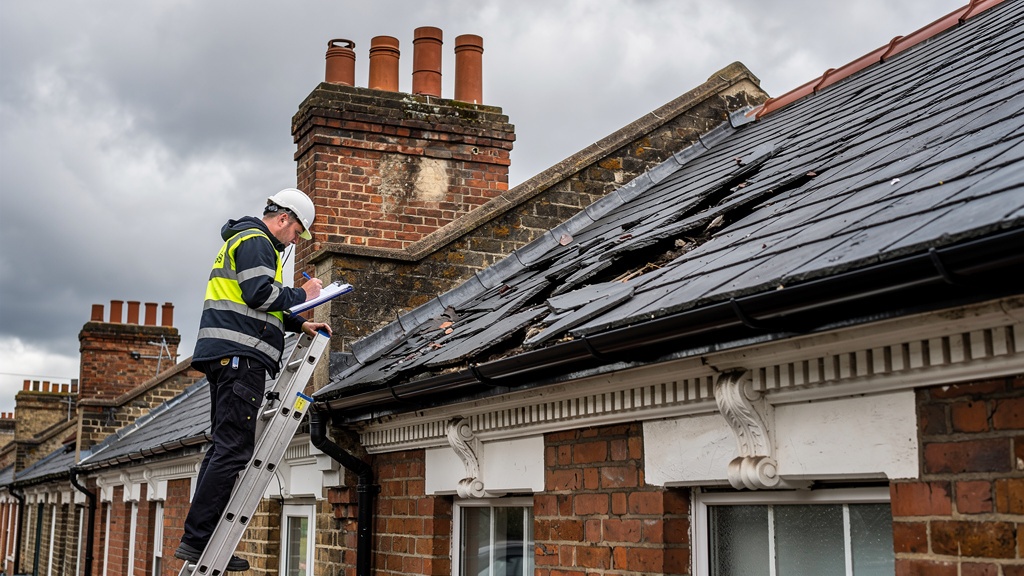
- Roof covering — visible defects in tiles, flashings, ridge and valley work
- Windows and external doors — operation, seals, glazing quality, drainage
- Drainage — gutter alignment and falls, downpipe connections
- External ground levels, paving, paths and boundary treatments
Internal Room-by-Room Inspection
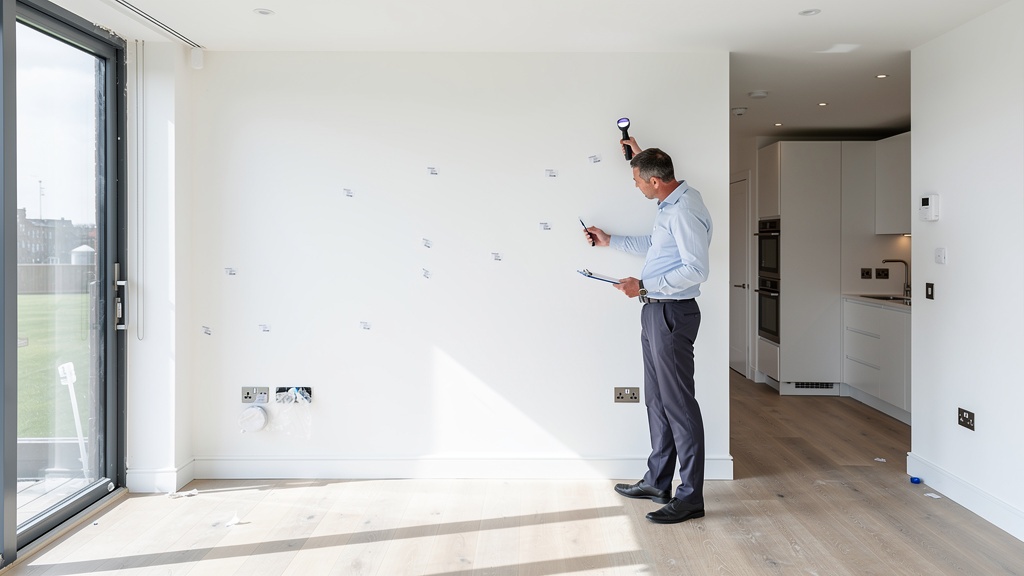
- Plasterwork — hollowness, cracking, finishing quality at angles and reveals
- Painting and decorating — runs, misses, roller marks, poor edge cuts
- Floor coverings — level, fixing, cutting quality at edges
- Kitchen — unit alignment and adjustment, door and drawer operation, worktop joints
- Bathrooms — tiling quality (lippage, grout consistency), sealing, fixings
- Joinery — skirting, architrave and door frame quality
- Doors — operation, alignment, gap consistency, latching

Services and Compliance
- Electrical installation — socket testing, circuit checks, consumer unit inspection
- Heating and hot water — commissioning, thermostat operation, boiler documentation
- Ventilation — extractor fan operation in kitchens and bathrooms (building regulation requirement)
- Insulation — visible inspection at loft hatch (if accessible)
- Fire safety — smoke alarm installation, fire door compliance
When to Book Your Snagging Survey
Ideally, you want your snagging survey done before legal completion. This gives you the strongest possible position: you can make completion of the purchase conditional on certain defects being rectified.
In practice, many developers resist pre-completion access for independent surveyors. If this happens, don't be deterred — commission your snagging survey immediately after completion, before you move in. Empty rooms are much easier to inspect, and you're still firmly within the developer's initial defects liability period.
Some buyers wait until they've lived in the property for a few weeks. This isn't ideal — you lose the pristine condition evidence, and it's harder to photograph cosmetic defects once furniture is in place — but it's still worth doing. You have two years from completion to claim under the developer's defects liability period.
NHBC Warranty: What It Covers
Most new-build properties in the UK come with an NHBC Buildmark warranty (or an equivalent from Premier Guarantee, LABC Warranty, or similar providers). It's important to understand what this warranty actually covers — because it doesn't cover everything buyers assume it does.
Years 1–2 (Developer Defects Period): The developer must fix any defect you report — structural or cosmetic. NHBC acts as a backstop if the developer won't respond. This is your primary protection window.
Years 3–10 (NHBC Structural Warranty): NHBC covers significant structural defects only. Cosmetic and minor issues are no longer covered. The warranty specifically excludes normal settlement, normal wear and tear, and issues caused by the homeowner.
Dealing With Developers
Most responsible developers will engage constructively with a professional snagging report. They'd rather fix things quickly than have legal disputes or bad online reviews. However, some push back — disputing findings, delaying repairs, or claiming defects are "within tolerance."
This is where a professional report from a RICS accredited surveyor makes a significant difference. Developers take formal RICS reports more seriously than handwritten lists from homeowners. When disputes do arise, a professional report serves as the evidential foundation for escalation through NHBC Resolution, the New Homes Ombudsman, or ultimately legal proceedings.
In our experience, having a professional snagging survey also changes the tone of the interaction. Developers are more cooperative when they know the buyer is represented by a qualified professional who understands what "acceptable tolerance" actually means under the relevant British Standards.
Key Takeaways
- The average new-build in the UK has over 100 defects at the time of legal completion.
- Commission your snagging survey before you complete — or immediately after, before moving in.
- The developer's defects liability period lasts two years — this is your primary window to have snags fixed for free.
- A professional RICS snagging report carries far more weight with developers than a homeowner's list.
- NHBC warranty covers structural defects for 10 years but cosmetic issues only for the first two years via the developer.
- Most developers respond cooperatively to a professional snagging report — disputes are the exception, not the rule.
Frequently Asked Questions
The best time is after legal completion but before you move in, or right at completion. This gives you access to empty rooms and means defects are easier to spot. Critically, it means you can submit your snagging list to the developer while you still have maximum legal leverage — before you've settled in and the developer's team has moved on.
You can compile your own observations, and it's worth doing. But a professional snagging surveyor will find significantly more defects — particularly hidden or technical ones. Professional surveyors know exactly what to look for, have the tools to check it (moisture meters, spirit levels, socket testers), and produce a formal report that developers take more seriously than a homeowner's handwritten list.
Some developers do try to prevent pre-completion access for snagging surveyors. This is not something they can legally enforce post-completion — once you own the property, you can have whoever you like carry out an inspection. Pre-completion access is at the developer's discretion, but post-completion you have every right to commission a survey.
Most new-build homes in the UK come with an NHBC Buildmark warranty (or similar). This covers structural defects for 10 years and includes a two-year developer defects period during which the developer must fix any reported snags at their own cost. It's this two-year window that makes a prompt snagging survey so important.
According to independent research and the New Homes Quality Board, the average new-build property has around 100–160 defects at the time of legal completion. Most are cosmetic but a significant minority are structural or building-regulation related. Our snagging surveys typically identify between 60 and 200 items depending on the size and quality of the build.
Protect Your New Home — Get It Snagged
A new-build is an exciting purchase. But "new" doesn't mean "perfect." The only reliable way to know what you're getting is to have it independently inspected by a RICS accredited surveyor before the developer's team disperses and your warranty window narrows.
At Hammersmith Surveyors, we offer professional new build snagging surveys across all West London postcodes. We produce clear, photographically-documented reports that give you the evidence you need to hold developers to account. Get in touch today to book your snagging inspection.