"Do I need a survey if I've already got a solicitor?" We hear this every week. The short answer is yes — emphatically. Here's why surveys and conveyancing do completely different jobs, and why skipping either one is a risk no sensible buyer should take.
What Is Conveyancing?
Conveyancing is the legal process of transferring property ownership from seller to buyer. Your solicitor (or licensed conveyancer) carries out searches — local authority, water, environmental, drainage — reviews the title deeds, checks for restrictions, easements, or covenants, and manages the exchange of contracts and completion.
Critically, conveyancing is about the legal title to the property: who owns it, what rights come with it, and whether there are any legal issues. It tells you almost nothing about the physical condition of the building itself.
What Is a Property Survey?
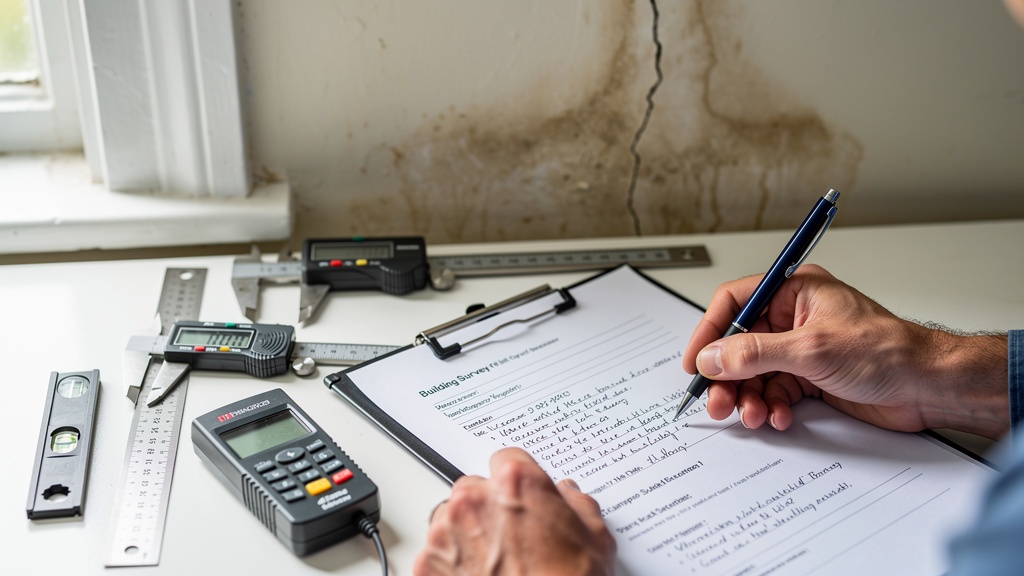
A property survey is a physical inspection of the building by a qualified surveyor — ideally a RICS-accredited professional. The surveyor visits the property, inspects it systematically, and produces a written report on its condition: defects found, risks identified, and recommended actions.
There are three main RICS survey levels:
- Level 1 (Condition Report) — Basic condition overview. Suitable for new-build or near-new properties only.
- Level 2 (HomeBuyer Report) — The most popular choice for conventional properties in reasonable condition. Includes condition ratings, advice on defects, and a market valuation.
- Level 3 (Building Survey) — The most comprehensive option. Recommended for older properties (pre-1950), unusual construction, or properties in poor condition. Includes detailed investigation of defects and repair recommendations.
The Key Differences
| Aspect | Conveyancing (Solicitor) | Property Survey (Surveyor) |
|---|---|---|
| Focus | Legal title & ownership | Physical condition of building |
| Who does it? | Solicitor or conveyancer | RICS surveyor |
| Covers defects? | No — legal issues only | Yes — damp, cracks, roof, etc. |
| Legally required? | Yes (for mortgage/title transfer) | No — but strongly recommended |
| London cost range | £1,200 – £3,000 | £400 – £1,500 |
Which Survey Do You Need?
For most properties in West London — Victorian terraces, Edwardian semis, 1930s semis, period conversions — we recommend a Level 2 HomeBuyer Report as a minimum. For any property built before 1900, in poor condition, unusual construction, or significantly extended or altered, a Level 3 Building Survey is the right choice.
Important
Your mortgage lender's valuation is NOT a survey. It's a brief check that the property is worth the money being lent. It will not identify damp, structural issues, or defects.
When Should You Book Each?
Instruct your solicitor as soon as your offer is accepted — conveyancing can take 8–16 weeks and delays are costly. Book your survey once the seller has accepted your offer and you have the property address confirmed. Don't wait for the mortgage offer — surveys are done in parallel, and you want results before you exchange contracts.
Typical Costs in London
A RICS Level 2 HomeBuyer Report in West London typically costs £450–£750 for a standard two or three-bedroom property. A Level 3 Building Survey costs £700–£1,200+ depending on size and complexity. These fees are modest compared to the potential cost of undiscovered defects — a single missed subsidence issue could cost £20,000–£50,000 to remediate.
Using Survey Results in Negotiations
A survey report gives you real negotiating power. If significant defects are found, you can: ask the seller to reduce the price by the estimated repair cost; ask the seller to fix issues before completion; or withdraw from the purchase with a clearer conscience. Our survey reports include estimated repair costs specifically to help buyers in this position.
Key Takeaways
- ✅ Conveyancing covers legal title — surveys cover physical condition. You need both.
- ✅ Your solicitor cannot spot damp, cracks, or a failing roof — only a surveyor can
- ✅ For Victorian or Edwardian London properties, choose Level 2 or Level 3
- ✅ A mortgage valuation is NOT a survey — never rely on it alone
- ✅ Book your survey as soon as your offer is accepted — don't wait
- ✅ Use your survey report to renegotiate the price if defects are found
Book Your RICS Survey Today
We survey properties across Hammersmith, Fulham, Chiswick, Shepherd's Bush, Richmond and all of West London.
Get a Free QuoteFrequently Asked Questions
What is the difference between a survey and conveyancing?
Conveyancing is the legal process of transferring property ownership — your solicitor checks title, searches, and contracts. A property survey is a physical inspection of the building by a RICS surveyor, identifying defects, risks and repair needs. They do completely different jobs and you need both.
Do I need a survey if I already have a solicitor?
Yes, absolutely. Your solicitor checks the legal title to the property, not its physical condition. Only a RICS surveyor can identify structural problems, damp, roof defects, or drainage issues — defects that could cost you tens of thousands of pounds if missed.
Is a mortgage valuation the same as a survey?
No. A mortgage valuation is a brief check carried out for the lender to confirm the property is worth the loan amount. It is not a survey. It will not identify damp, cracks, structural issues, or any defects. Always commission a separate RICS survey for your own protection.
When should I book a survey?
Book your survey as soon as your offer is accepted and confirmed — don't wait for the mortgage offer. You want the results before you exchange contracts, so there is still time to negotiate on price or withdraw if serious defects are found.