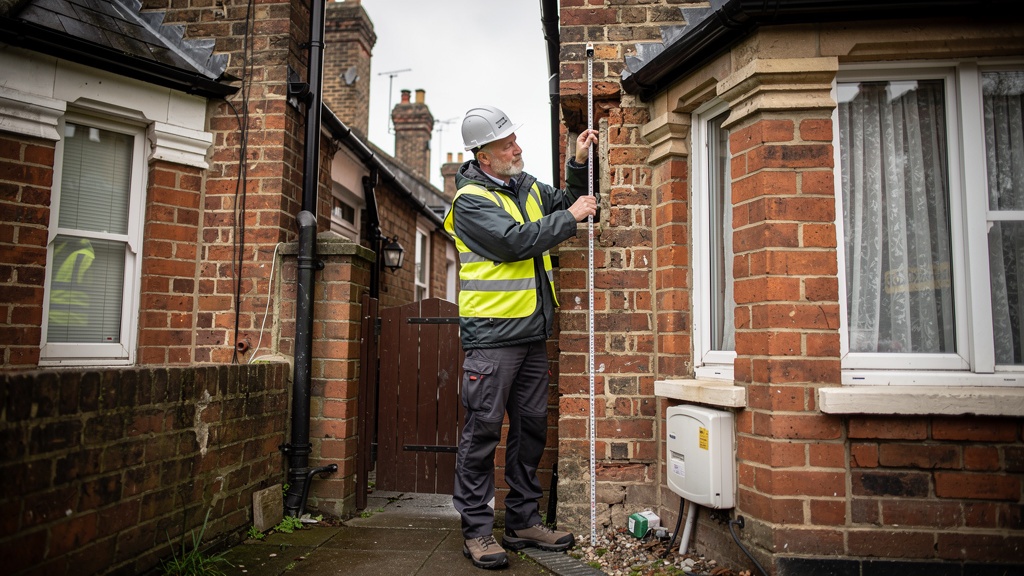
A schedule of condition is one of the most underused documents in property — yet it is also one of the most powerful. For tenants, it is the single most effective defence against unfair dilapidations claims. For landlords, it is the clearest possible record of what they handed over. For homeowners facing neighbouring building works, it is essential protection. Here is everything you need to know.
What Is a Schedule of Condition?
A schedule of condition is a detailed, formal record of the physical state of a property at a specific point in time. Prepared by a qualified RICS surveyor, it combines written descriptions with photographs to document every surface, element, and defect present at the time of inspection.
The key word is baseline. The schedule creates a legally significant starting point against which future changes can be measured. It answers the question that drives almost every dilapidations dispute: what condition was the property in when the tenancy started?
Once agreed and signed by both parties, the schedule of condition is typically annexed to the lease. It becomes a contractual document — part of the legal agreement between landlord and tenant.
Who Needs One — and When?
Commercial Tenants
Commercial tenants face the greatest financial exposure from dilapidations claims. At the end of a lease, a landlord can serve a terminal schedule of dilapidations requiring the tenant to repair, redecorate, and reinstate alterations — potentially at significant cost. Without a schedule of condition, the tenant has no evidence to limit those claims to deterioration that occurred during their tenancy.
We recommend every commercial tenant instruct a schedule of condition before taking on a lease. The cost — typically £400–£900 for a small-to-medium unit in West London — is negligible compared to the potential dilapidations liability at lease end.
Residential Tenants
For residential tenancies, the equivalent document is usually called an inventory or check-in report. For shorter, standard residential lets this is often handled by a letting agent. However, for longer residential leases, or where a tenant is taking on a property in anything less than perfect condition, a full RICS schedule of condition provides much stronger protection than a standard inventory.
Landlords
Landlords benefit too. A clear schedule of condition agreed at lease start prevents tenants from disputing the extent of end-of-tenancy repairs by claiming the damage was pre-existing. It also strengthens your position if the tenant causes damage and you need evidence to support a deposit deduction or legal claim.
Homeowners with Neighbouring Works
Under the Party Wall Act 1996, if your neighbour is carrying out notifiable building works — a loft conversion, rear extension, basement dig, or work directly on a shared wall — you should always request a schedule of condition of your property before works begin. This protects you if the works cause damage: you have photographic evidence of what existed before.
Critical Timing
A schedule of condition must be prepared before the tenancy starts or before building works begin. Once a tenant has moved in — or once scaffolding has gone up — establishing the pre-existing condition becomes far more difficult and the schedule loses much of its evidential weight.
What Does a Schedule of Condition Cover?
A thorough schedule of condition prepared by our surveyors covers every accessible element of the property, including:
- External envelope — roof covering, chimneys, gutters, downpipes, external walls, windows and doors, any outbuildings
- Internal structure — walls, ceilings, floors, staircases, and structural elements in every room
- Decorative condition — paintwork, wallcoverings, floor finishes, fixtures and fittings
- Services — condition and age of visible plumbing, heating, and electrical installations where accessible
- Existing defects — any cracks, damp staining, water damage, rot, or other deterioration present at the time
- Photographic record — referenced photographs of every room and all noted defects
The written report and photographs together form a comprehensive record. Each photograph is captioned and referenced to the written description, so there is no ambiguity about what was recorded and where.
Dilapidations: How the Schedule Protects You
Dilapidations is the term used to describe the repairing and reinstatement obligations a tenant owes under a commercial lease. At lease end, a landlord can serve a schedule of dilapidations — a formal list of works the tenant must carry out (or pay for) to return the property to the condition required by the lease.
Without a schedule of condition, a tenant may find themselves liable for repairs that were clearly pre-existing — damage to a ceiling that was cracked before they arrived, damp staining that was present from day one, floor damage that predates their occupation. With a schedule of condition, the tenant can point to the agreed record and say: that damage existed when we took the property. It is not our responsibility.
The "Caveat" Approach
Where a property is taken in less than perfect condition, the schedule of condition is incorporated into the lease with a caveat — a clause stating that the tenant is only required to return the property to the condition evidenced in the schedule, rather than a higher standard. Without this protection, a tenant taking on a run-down property could theoretically be required to hand it back in better condition than when they found it.
Interim Dilapidations
Dilapidations claims are not only made at lease end. Landlords can serve interim schedules during the tenancy requiring the tenant to carry out repairs. A schedule of condition is equally valuable here, allowing the tenant to challenge any items that were pre-existing defects rather than damage caused during their occupation.
Schedule of Condition and the Party Wall Act
Whenever a neighbouring property owner serves a Party Wall Notice on you, one of the most important things you can do — before works begin — is request a schedule of condition of your property.
Building works, particularly excavations, basement conversions, and work directly on party walls, carry a real risk of causing damage to adjoining properties. Cracking, settlement, damage to plasterwork, disturbed services — these are all documented consequences of major building works in the dense Victorian terrace housing typical of Hammersmith, Fulham, and Chiswick.
If damage occurs, the question becomes: was that crack there before, or did the works cause it? Without a schedule of condition, this dispute becomes a matter of one party's word against another's. With a schedule, the answer is clear.
The costs of a schedule of condition in this context are typically borne by the building owner (the party carrying out the works), not the adjoining owner. This is a right you can insist upon when served with a Party Wall Notice.
How to Get a Schedule of Condition
At Hammersmith Surveyors, our RICS-qualified team prepares schedules of condition for both commercial and residential properties across West London. Here is how the process works:
- Contact us — ideally as soon as heads of terms are agreed on a lease, or as soon as you receive a Party Wall Notice
- We agree the scope — we discuss the property, the size, and any specific concerns, and provide a fixed-fee quote
- Inspection — our surveyor carries out a thorough inspection, typically taking 1–3 hours depending on property size
- Report production — we produce a written report with referenced photographs, typically within 5 working days
- Agreement and annexure — both parties sign the schedule, which is then annexed to the lease or used as evidence in Party Wall proceedings
Need a Schedule of Condition?
Whether you're signing a commercial lease, starting a tenancy, or dealing with neighbouring building works — our RICS surveyors will protect your position with a thorough, legally robust schedule.
Get a Free QuoteFrequently Asked Questions
What is a schedule of condition?
A schedule of condition is a formal, detailed written and photographic record of the condition of a property at a specific point in time — usually at the start of a tenancy or before neighbouring building works begin. It creates an agreed baseline that protects both parties from future disputes.
Who needs a schedule of condition?
Anyone taking on a commercial or residential lease should strongly consider one — particularly tenants facing potential dilapidations claims. Homeowners whose neighbours are undertaking Party Wall Act works should also always request a schedule before works begin.
How much does a schedule of condition cost?
For a typical commercial unit in West London, costs are typically £400–£900 depending on size and complexity. For a residential property, usually £300–£600. A very small investment relative to the potential cost of a dilapidations dispute.
What is the difference between a schedule of condition and a dilapidations schedule?
A schedule of condition records the state of a property at the start of a tenancy. A dilapidations schedule is prepared at or near the end, identifying repairs and reinstatements the tenant must carry out. The opening schedule is used to limit what the tenant is responsible for.
When should I instruct a schedule of condition?
Before the tenancy begins — ideally before the tenant moves any possessions in. For Party Wall Act purposes, before any notifiable works commence. Once occupation or works have started, the evidential value of the schedule is significantly reduced.